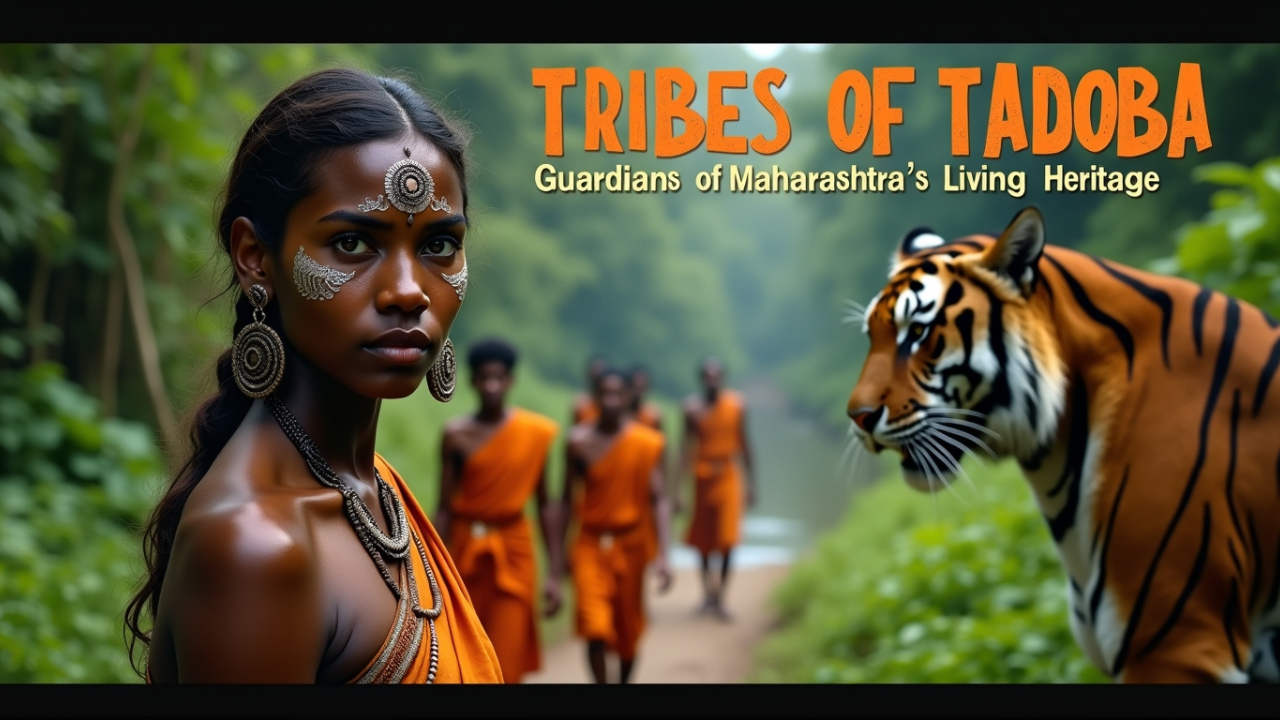
Tribes of Tadoba – Guardians of Maharashtra’s Living Heritage
Book your Tadoba safari online with Seven Safar and venture off tiger trails into the living heart of the tribal world in Maharashtra. Established communities deep in the teak forests of Tadoba Andhari Tiger Reserve have lived for centuries with the rhythms of the wild. From the Gonds and Warlis to the Bhils these tribes lived in tune with nature long before the park was developed into a protected reserve. The songs, festivals and art of these peoples are narrations of a community and a cultural geography intimately tied to the landscape which is the true soul of Tadoba.
Origins & Heritage of Tadoba’s Tribes
Tadoba’s story is not only about its magnificent wildlife and especially its tigers, it is about its people. The reserve is named after “Taru”, a Gond God, who is believed to be the protector of the forests and all living beings within it. For generations, the Gond, Warli, and Bhil tribes have lived in this part of Chandrapur, relying on the forest for their food, their shelter and their faith.
Their traditions are immersed in oral storytelling and the wisdom of their ancestors. They had long lived as hunters, farmers, and gatherers, guided by the sense that the forest was a living spirit that should be treated with respect. They venerate every tree and river, according to them every rock is consanguineous and dyes the earth with ecological depth that new conservation tries to maintain.
The Gond Tribe – Keepers of Forest Wisdom
Among the tribes of Tadoba, The Gonds is the largest group that has always shaped the culture of region. The Gonds are usually known as the “Children of the Forest” because of its deep connection to nature. Their legends speak of gobblers and tigers who balance life.
What really sets them apart is Gond Art, a globally renowned form of narrative expressed in patterns and colors. These elaborate paintings portray tigers, birds, trees and cosmic tales through fine dots and lines. Originally created on mud walls and floors, these paintings have now been adapted and sold globally while still carrying the essence of life in the forest.
The Gonds also rely on the forest for commodities like tendu leaves, mahua flowers and honey, following a traditional mode of harvesting that is sustainable. With their music, dance and folk songs they pay tribute to the very land that nourishes them, a vibrant culture in which every natural thing has a soul.
Warli & Bhil Tribes – Art, Music & Mountain Spirits
And if the Gonds are the cultural mainstay of Tadoba then the Warli and Bhil tribes add hues and beats to the landscape.
The iconic Warli paintings, simplicity geometric forms painted in white on earth coloured backgrounds, is associated with the Warli tribe, which is native to some areas of Maharashtra. These depictions of daily village life, animals, farming and festivals show how man lives in unison with nature. Warli women were traditionally the guardians of this art and the tradition in the style of painting was passed from mother to daughter.
The Bhil Is a celebrated tribe Of India, renowned for its country songs, dances & colourful bead jewels. Their festivals which means frequently harvest and rain tied are devoted to forest spirits of gratitude. A new tribe, a new experience and each one gradually broadens Tadoba’s cultural spectacle, to reveal a profound spirituality reconjoined with the wild.
Festivals & Rituals – Celebrating the Spirit of the Jungle
Festivals of the tribal people of Tadoba are vibrant, full of music, and very sacred. Pola festival which is the thanksgiving festival towards bulls and cattle, which are the main source of farming life. In the Madai festival, drumming, dance and prayers to the local deities accompanied by the entire village creates a euphoric celebration of life's cycles.
Snakes are worshipped during Nag Panchami as they are believed to be protectors and are a representation of fertility and rain. Dances of other sorts such as the Rela and the Dandar (circle dance) light up the night hours with music and rhythm, as local people circle around bonfires by the light of the full moon.
Rituals are living expressions of balance between the human and natural worlds told through indigenous people who embody their traditions and not merely those performing them but those who are their be all and end all, living them every moment.
Life & Livelihood – Harmony with the Wild
For the tribes of Tadoba, the forest is their abode as well as their source of income. Many are still reliant on forest produce like bamboo, tendu leaves and mahua for food and money. Their knowledge of the land and how to employ herbs, read animal signs and use fire is the basis of Traditional Ecological Knowledge (TEK).
Some access to forest has been curtailed by modern conservation but tribal people are more and more actively involved in eco-tourism and conservation work. Many now work as naturalist guides, forest guards, and artisans in eco-lodges. By joining in sustainable tourism, you are contributing not only to sustainable tourism itself but also supporting the preservation of their way of life through responsible travel.
Coexistence & Conflict – The Human–Wildlife Story
Like many other sanctuaries in India, Tadoba has seen moments of tension between conservation and tribal livelihood. The Madia Gonds and other tribes were even displaced from core forest areas for tiger conservation.
Yet, the forest is beginning to heal, along with an inclusive conservation ideology, which acknowledges that the forest does best when its original guardians are part of the solution. Tribal involvement in eco-development, handicraft co-operatives and nature guiding is allowing them to reconcile people-park relations.
Supported by connections to local NGOs, and by government programmes, a number of families are finding new ways to keep their heritage, while helping to protect Tadoba. The forest’s narrative is unfinished without a narrative of co-existence, resilience and regeneration.
Preserving Heritage – The Future of Tadoba’s Tribes
In the midst of such change, what was increasingly important and as important as the need to conserve Tadoba’s fauna was retaining the identity and culture of its tribes. Younger generations are reconnecting with Gond and Warli art, reviving traditional songs, and even participating in eco-tourism where they get to showcase their culture.
A handful of eco-lodges and cultural endeavors around Tadoba some backed by Seven Safar affirm ethical storytelling and local employment. Visitors are invited to honor tribal tradition, hear the stories and buy directly from the artisans. The preservation of culture is not charity and it is pure, unadulterated conservation.
Responsible Tribal Tourism – How Visitors Can Contribute
When you travel to Tadoba, you can make a difference for the local community by opting for community-based experiences. Purchase your souvenirs directly from tribal craftspeople, stay in eco-lodges that employ local people, and always ask permission before taking photographs.
Honor rituals, stories and cultural humility. Every purchase you make, every respectful act, helps sustain the people who have cared for this land for so long.
Seven Safar believes real travel is about connections and experiencing Tadoba through the eyes of its original habitants is none better.
Conclusion – Where Culture Meets Conservation
The tribal people in Tadoba are anonymous protectors of its wild core. Their art, their festivals, their traditional knowledge resonate to the beat of the forest, a testament that conservation isn’t just about animals but also about the people who share their lives with them.
When you journey into Tadoba with Seven Safar, you are not only seeing the roar of a tiger, you are hearing the echoes of an ancient culture that still guards this sacred ground.